

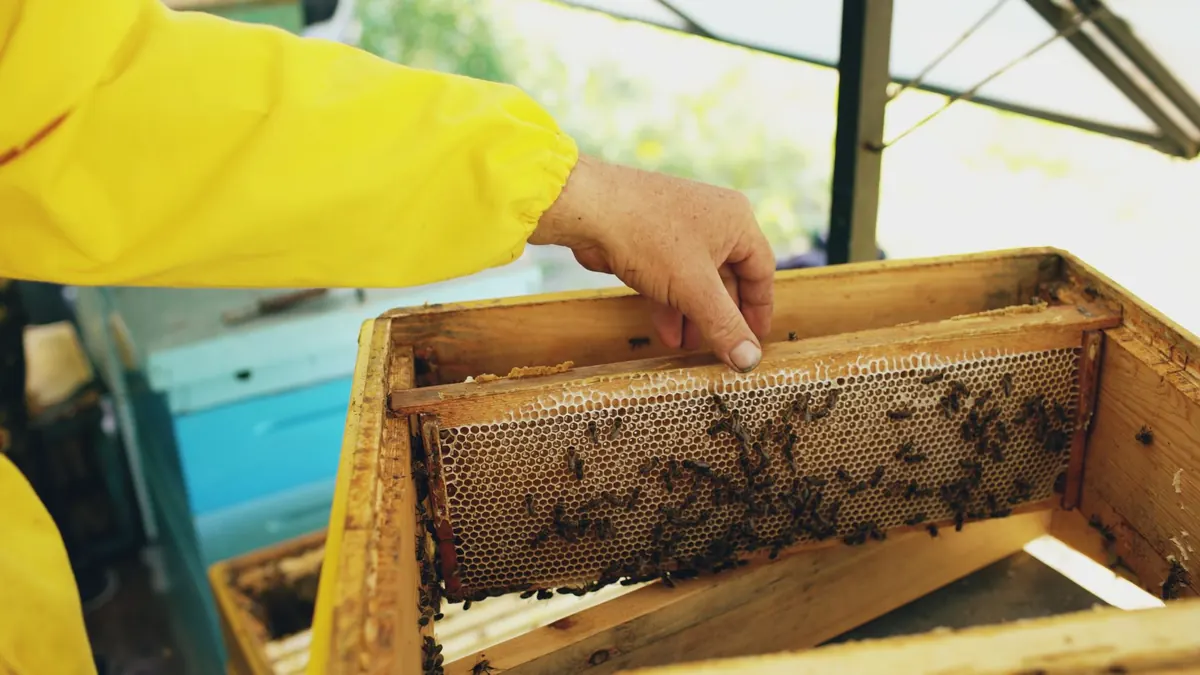
Beekeeping rewards a particular kind of attentiveness. Not the fussy sort, because colonies dislike being opened for the sake of it, but the sort that means you notice a queen has stopped laying, or that a hive feels light at the end of September, before either becomes a problem. The year has a shape to it, and the jobs that matter most shift from month to month. What follows is a working checklist for UK colonies, from the first cleansing flights of late winter to the last strap-down in November.
Winter: December to February
The colony is clustered and keeping itself warm. Your job is largely to stay outside the box. Heft each hive from the back, lifting a corner to judge the weight, and compare it with how it felt in autumn. If a hive is alarmingly light, feed fondant straight over the cluster. Never give syrup in cold weather: the bees cannot reduce the water content and it may ferment in the combs.
Most winter work happens with your hands in your pockets rather than in the hive.
- Clear entrances of dead bees, leaves and snow so the colony can ventilate.
- Check roofs, straps and stands after every gale.
- Look for woodpecker damage, which can go straight through a hive wall.
- Keep hives dry. Damp, more than cold, is what finishes colonies off, so make sure the roof is sound and condensation cannot drip onto the cluster.
- Resist the urge to open a hive unless you suspect starvation or disease. A quick lift of the crownboard on a mild, still day is enough if you must look.
Use the quiet weeks to clean equipment, build frames and read up on anything you meant to sort out last season. A spare brood box of drawn comb, ready and waiting in February, is worth more than any gadget you could buy in the sales.
Early Spring: March and April
The first warm afternoon brings cleansing flights, and the landing board tells you a lot: brown streaks suggest the colony has had a rough winter. Choose a calm day around 12°C or above, in the early afternoon when foragers are out, for the first full inspection.
Work through the frames with a purpose. Is there a queen, and is she laying? You are looking for eggs and young larvae, and a brood pattern that is reasonably solid rather than patchy and scattered. Then check stores, because a colony building up in March can eat its way through a surprising amount of honey during a cold snap.
If the weather turns and stores are low, a thin syrup — one part sugar to one part water — will keep them going until the first real nectar flow arrives. Feed it in a contact feeder or a rapid feeder directly over the cluster, and stop as soon as the willows and dandelions are giving.
What the First Inspection Tells You
Beyond the queen and the stores, note three things: temper, population and the state of the combs. A colony that boils up angrily in April will be unbearable in July, and it is far easier to requeen now than to wrestle with it in high summer. If you find more than a fistful of old, black, hollow combs, plan to replace them during the season while the colony is strong enough to draw new ones.
Late Spring: Late April and May
This is when the year accelerates. Oilseed rape comes into flower across much of lowland Britain, and a strong colony can fill a super in a week. Rapeseed honey sets hard and fast in the comb, so extract it promptly or leave it for the bees — a super of crystallised rape is a miserable job in June.
- Add supers before they are needed, not after. Bees need space to store the flow, and a crowded brood box is the single biggest trigger for swarming.
- Check every seven to nine days for queen cells once the weather is settled. Nine days is the point at which you can lose a swarm.
- Watch for the first drones. Their appearance means the colony has decided swarming is worth planning.
- Consider an artificial swarm or a Demaree if you find charged queen cells and want to keep the bees in the box.
- Put out a bait hive. Swarms are free bees, and a well-sited one with old comb and a drop of lemongrass oil will catch more than you expect.
Early Summer: June and July
Swarm season peaks between late May and early July, and inspections cannot slide. A colony that was calm and queenright a week ago can have sealed cells today. Look along the bottom bars and in the corners of frames; queen cells are rarely where you want them to be.
Once the main flow is over — usually by mid-July in the south, later in the north — clear the supers with a bee escape or a clearer board, extract, and get the wet supers back on the hives for the bees to clean up well away from other colonies, or store them somewhere wasp-proof. Leaving wet supers stacked in the open is an invitation to robbing, and robbing spreads disease.
Monitor Varroa Now, Not Later
An August treatment is only as good as the decision behind it, and that decision needs data. Do a sugar roll or an alcohol wash on a sample of around 300 bees and count the mites. If you find more than two or three, plan to treat. Guessing is how colonies go into winter carrying a mite load they cannot survive.
Late Summer: August
The bees that will carry the colony through winter are being reared now. That makes August the most important month of the beekeeping year, and it is the one most often neglected because the honey has already been taken.
- Treat for varroa immediately after the harvest, following the product instructions precisely.
- Unite weak colonies rather than hoping they will pull through. Two half-colonies make one good one.
- Reduce entrances against wasps, which are desperate by late August and will strip a weak nuc in a day or two.
- Feed if stores are short, and keep feeding until the hive is heavy enough to survive to spring.
Autumn: September to November
Autumn is about weight, dryness and shutting down. Aim to have each colony carrying roughly 20kg of stores, and finish your feeding by the end of September in most years, while the bees can still ripen and cap the syrup. Use a thick syrup — two parts sugar to one part water — and feed fast in a single large volume if you can.
Ivy gives a late flow from late September into October, and the bees will work it enthusiastically on mild days. Be aware that ivy honey granulates quickly and can set like concrete in the combs, which is a nuisance the following spring.
As the nights draw in:
- Remove queen excluders so the cluster can move up to its stores.
- Fit mouse guards once the weather turns cold and the wasps have gone.
- Reduce entrances, and secure roofs against winter gales.
- Insulate above the crownboard if you keep your hives in an exposed spot.
- Wrap or net hives where woodpeckers are a known problem.
- Strap everything down and check the stands one last time.
If your colony is broodless in late December or January, a midwinter oxalic acid trickle is a well-established way to knock back the mites that remain. Check the current legal position and product guidance before you use it.
Reading the Hive Instead of the Calendar
Every date in this article is approximate. A hive in Cornwall, a hive at 300 metres in the Pennines and a hive in a sheltered Aberdeenshire garden will run weeks apart, and a cold April can undo everything March promised.
The calendar tells you when to look. The colony tells you what to do.
Use the months as a prompt to get suited up, then let what you find on the frames set the agenda. If the bees are ahead of the season, work ahead with them.
Keep Records — The Tool You Will Thank Yourself For
A notebook costs less than a smoker and outperforms most of the kit you will buy. After every inspection, write down the date, the weather, the number of frames of brood, the stores, the temper, whether you saw the queen, and what you did about it. By next spring you will know which hive swarmed, which one struggled, and which queen is worth breeding from.
The Point of the Checklist
None of these tasks is difficult on its own. The skill lies in doing them at the right moment, which is usually a fortnight earlier than feels necessary. Work the year in order, keep the hives dry and heavy, keep the mite numbers down, and give the bees the one thing they value above everything else: a beekeeper who leaves them alone when there is nothing to do.
Photo: Vitaly Gariev / Pexels